NVIDIA Omniverse: What It Is and Why VFX Artists Should Care
📌 Table of Contents
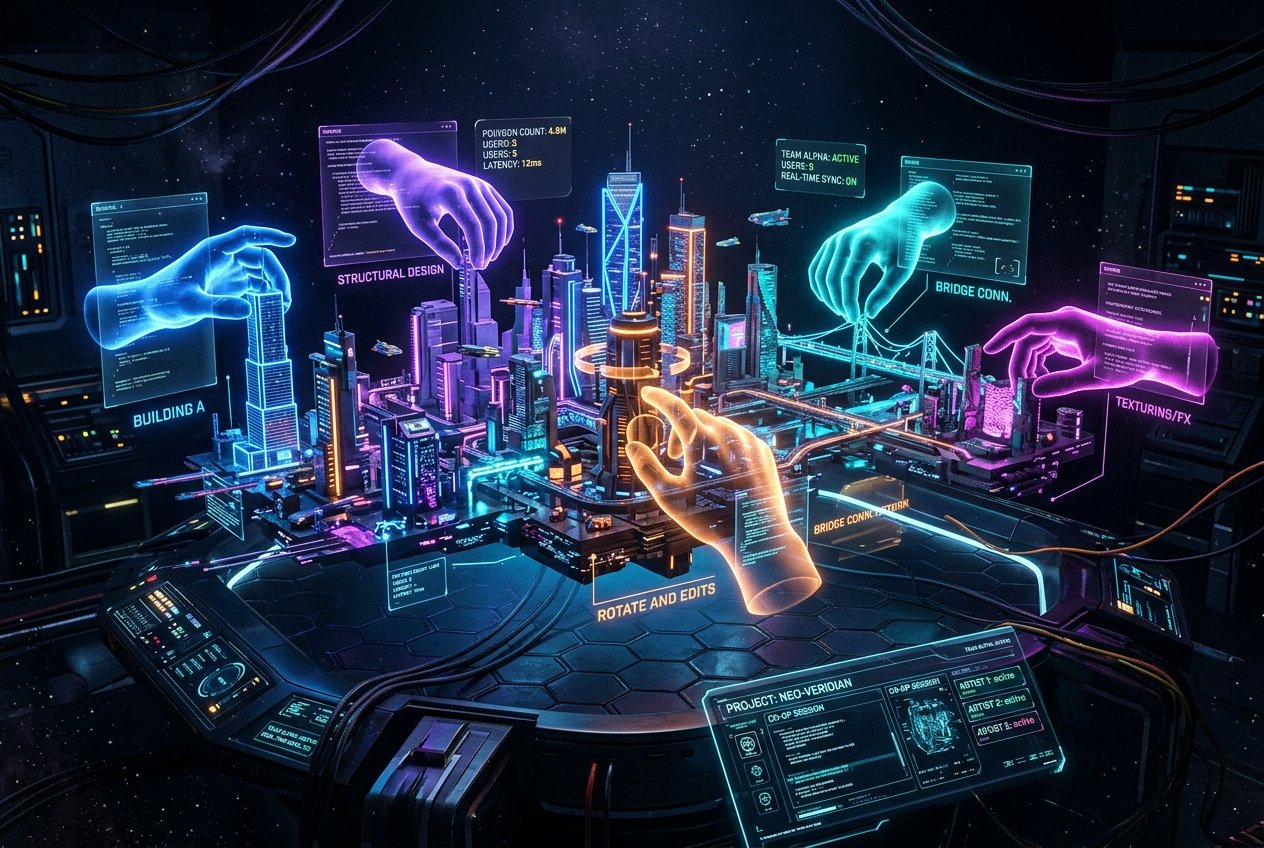
NVIDIA Omniverse is a platform built to solve one of the most persistent headaches in 3D production: getting different software — Maya, Blender, Houdini, Unreal, and dozens of others — to work together on the same scene without constant file-format conversion and data loss. For students entering VFX or 3D modeling, understanding Omniverse is increasingly relevant because major studios and manufacturers are adopting it as connective infrastructure across their pipelines.
The core problem it solves
A typical VFX or game pipeline uses many specialized tools — one for modeling, another for simulation, another for lighting, another for final assembly. Historically, moving a scene between these tools meant exporting, converting, and often losing data or breaking materials along the way. Omniverse is built around **OpenUSD** (Universal Scene Description, originally created by Pixar), a common language for describing 3D scenes that different software can read and write simultaneously — meaning an artist working in Maya and another working in Houdini can, in principle, be editing the same live scene.
Real-time collaboration
Because Omniverse keeps a live, shared version of a scene rather than static exported files, multiple artists — even working in different software — can see each other's changes in near real time. For studios with large, distributed teams (increasingly common as India-based studios collaborate with international clients), this significantly reduces the back-and-forth of the traditional "export, send, review, re-export" cycle.
Beyond entertainment
Omniverse has also become central to industrial applications — companies like General Motors, Mercedes-Benz, Siemens, and Foxconn use it to build digital twins of factories and products. This matters for career planning because it means OpenUSD and Omniverse skills are valuable outside entertainment too, in manufacturing, architecture, and robotics simulation — broadening where a 3D artist's skills are applicable.
AI integration
NVIDIA has increasingly layered generative AI directly into Omniverse — tools that can generate OpenUSD-compliant 3D content from text descriptions, apply physically accurate materials automatically, and assist with large-scale scene assembly. Audio2Face, NVIDIA's audio-driven facial animation tool, is also built on this same OpenUSD foundation, connecting back to digital human and character pipelines.
What to actually learn
Students don't need to master Omniverse as a standalone skill immediately, but understanding what USD/OpenUSD is and why it matters — as a growing industry standard for scene interchange — is worth building familiarity with, especially for anyone aiming at VFX, previsualization, or virtual production roles where multi-software collaboration is now the norm rather than the exception.