Houdini and AI: How Procedural VFX Is Evolving
📌 Table of Contents
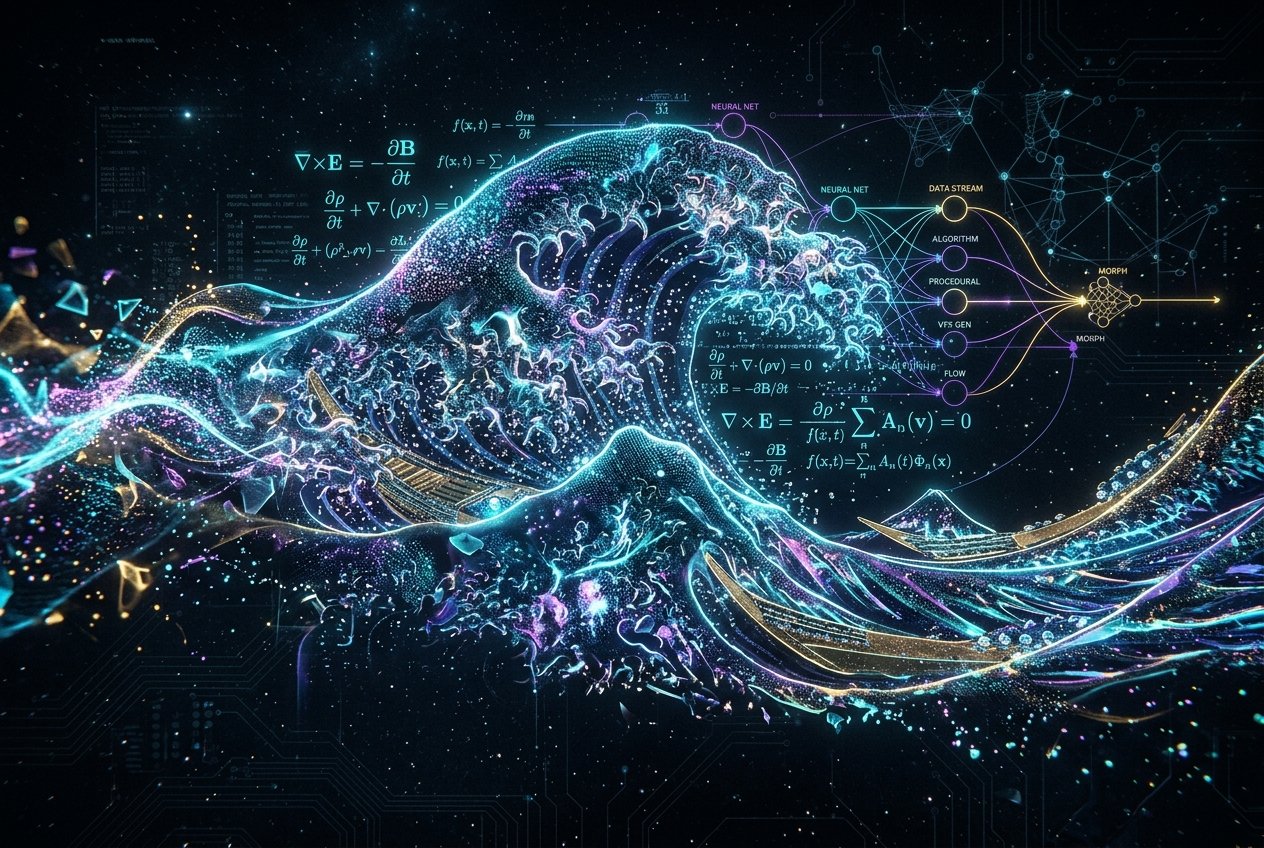
Houdini has always stood apart from other 3D software because of its procedural, node-based approach — every operation is a node that can be tweaked, reordered, and rebuilt non-destructively. That foundation turns out to be unusually well-suited to integrating AI tools, because procedural systems and AI-driven generation share a similar underlying logic: rules and processes that generate results, rather than manually authored final output.
Where AI is showing up inside Houdini workflows
SideFX and third-party developers have increasingly built AI-assisted tools into simulation, look-development, and asset generation workflows. AI-assisted upscaling and denoising for simulations (smoke, fire, fluid) can cut render and preview times significantly, letting artists iterate on a look faster than waiting for full-resolution simulations every time. Machine-learning-driven material and texture generation tools can populate a scene with production-quality surfacing faster than manual texture painting, particularly useful for environment and set-dressing work where dozens of variant assets are needed.
Houdini's native strength: procedural + USD
Houdini's Solaris/LOPs context, built natively around OpenUSD, positions it as one of the primary tools studios use for USD-based look-development and lighting pipelines — and NVIDIA's growing suite of generative AI models for OpenUSD content plug naturally into this workflow, letting artists generate or modify scene elements using AI while staying inside Houdini's procedural, non-destructive system.
Why procedural thinking matters more, not less
A common worry is that AI generation makes procedural skills less relevant — why build a complex node network if AI can generate the result directly? In practice, the opposite is proving true in production: AI-generated output is rarely final, and procedural systems are exactly what let artists take a rough AI-generated element and integrate it controllably into a larger scene, adjust it non-destructively, and make it match specific shot requirements. Procedural thinking is what turns a generic AI output into something usable in context.
What this means for VFX students
Houdini has a genuinely steep learning curve compared to Maya or Blender, which is why it's usually recommended as a second or third 3D tool rather than a starting point. But for students aiming specifically at FX, simulation, or procedural environment work, Houdini remains close to mandatory — it dominates the FX department at most major VFX studios. Building comfort with node-based, procedural thinking early (even in simpler tools like Blender's Geometry Nodes) makes the eventual jump to Houdini considerably smoother, and increasingly, that procedural fluency is exactly what lets an artist work effectively alongside AI-generation tools rather than being replaced by them.