The New Job Roles AI Has Created in Creative Industries
📌 Table of Contents
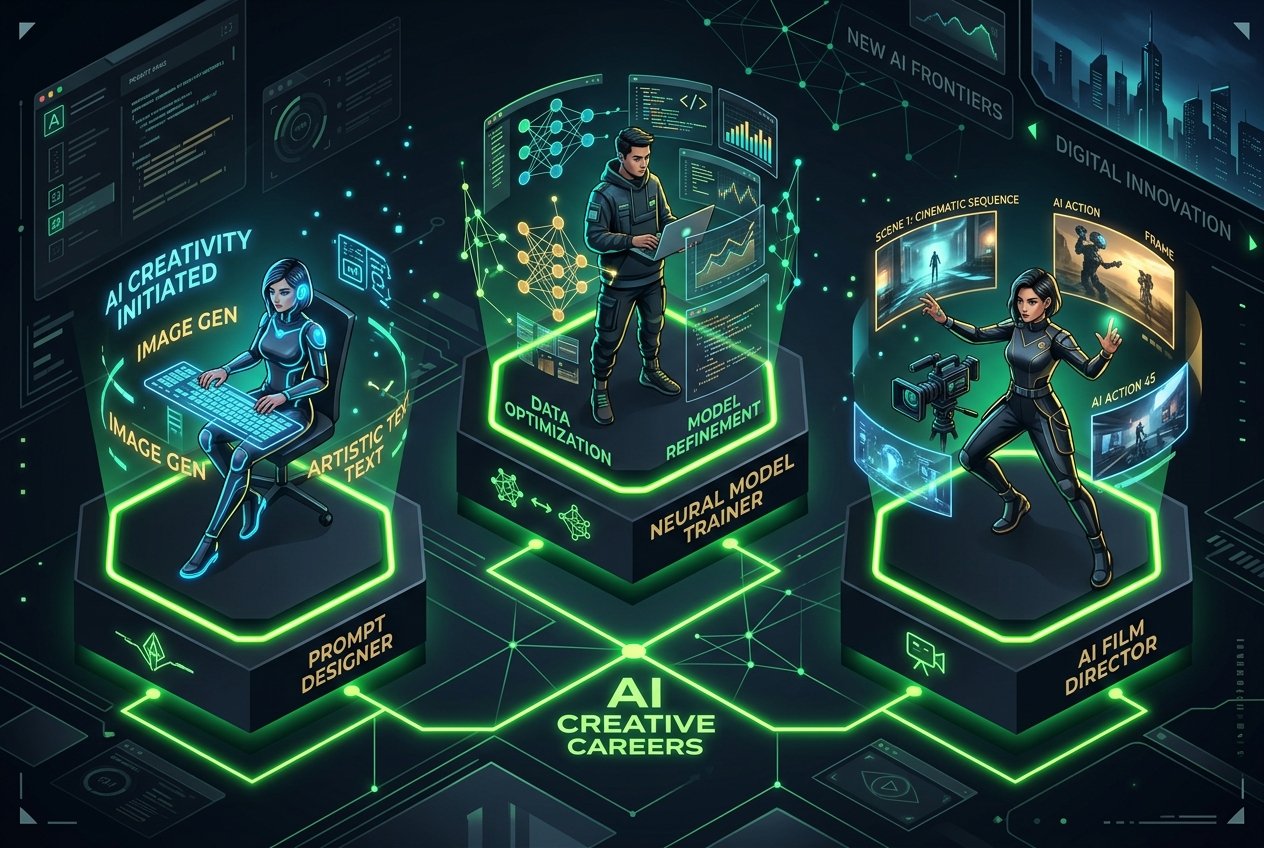
While much of the conversation around AI in creative fields focuses on jobs it might eliminate, a genuinely useful counter-question for students is which jobs it's actually creating — and the answer is a growing list of hybrid roles that didn't exist in animation, VFX, gaming, or design job listings even a few years ago.
AI Animator
This emerging role combines traditional animation knowledge with the ability to generate, direct, and refine AI-assisted animation passes — using tools for in-betweening, facial animation, and rough motion generation, then applying trained animation judgment to fix and polish the output. It's distinct from a traditional animator role specifically because it requires fluency in AI tool workflows as a core, not incidental, part of the job description.
Prompt Engineer (Creative/Visual)
Distinct from the technical prompt engineering roles common in software, this is a creative-industry-specific position focused on generating consistent, high-quality visual or video output from AI models for a specific studio or brand's needs — building and refining prompt libraries, understanding model-specific quirks, and often working alongside art directors to translate creative briefs into effective AI generation strategies.
AI Pipeline / Integration Artist
As studios build AI tools into existing production pipelines (rather than using them as standalone consumer apps), a role has emerged for artists and technical staff who specifically manage this integration — setting up custom AI workflows (in tools like ComfyUI), training studio-specific models or LoRAs on a brand's visual style, and maintaining consistency and quality control across AI-assisted production stages.
AI-Assisted Concept Artist / Designer
Rather than replacing concept artists, AI has shifted much concept work toward rapid AI-assisted ideation followed by human refinement — a role that explicitly expects artists to generate dozens of AI-assisted directions quickly, then apply strong art direction and manual skill to develop the strongest options into production-ready concepts.
Digital Human / Virtual Character Specialist
With tools like MetaHuman Creator and NVIDIA ACE making photorealistic digital humans far more accessible, dedicated roles have emerged specifically for building, rigging, and directing AI-driven virtual characters — spanning games, virtual production, and increasingly corporate and advertising applications like virtual spokespeople.
What connects all of these roles
Every one of these emerging positions requires the same underlying combination: solid traditional creative or technical training, plus genuine fluency directing and refining AI-generated output — not replacing craft judgment with automation, but applying that judgment to a new, faster-moving input. None of these roles exist for people who only know how to prompt an AI tool without understanding what good creative work looks like underneath it.
For students planning ahead
Rather than treating AI skill-building as separate from core training, students benefit from viewing these hybrid roles as the realistic destination for a well-rounded creative education — one where traditional fundamentals and AI tool fluency are trained together, since that combination is specifically what's driving new job creation across the industry right now.