How Studios Are Actually Using AI Today (Not the Hype Version)
📌 Table of Contents
Between viral demos and genuine industry adoption, there's often a large gap — some AI capabilities shown in demos aren't yet production-reliable, while some quieter, less flashy AI integrations are already deeply embedded in daily studio workflows. Here's a grounded look at where AI genuinely sits in production right now.
Pre-production and previsualization
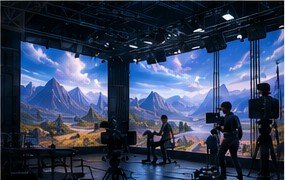
AI video generation tools are being used extensively for previz — quickly visualizing how a scene, shot, or sequence might look before committing significant budget to traditional production. This lets directors and studios test creative ideas fast and cheap, catching problems before they become expensive to fix later in the pipeline. Major studios have adopted tools like Runway specifically for this purpose on real productions, including work connected to award-recognized films.
Facial and dialogue animation
Audio-driven facial animation tools (NVIDIA's Audio2Face and similar systems) are increasingly used to generate a rough first-pass facial performance directly from recorded dialogue, which animators then refine rather than hand-keying an entire performance from a blank rig. This is one of the more mature, reliably production-used AI applications in animation pipelines today, specifically because the output requires human polish anyway — reducing risk of relying on it unsupervised.
Rotoscoping, cleanup, and technical grunt work
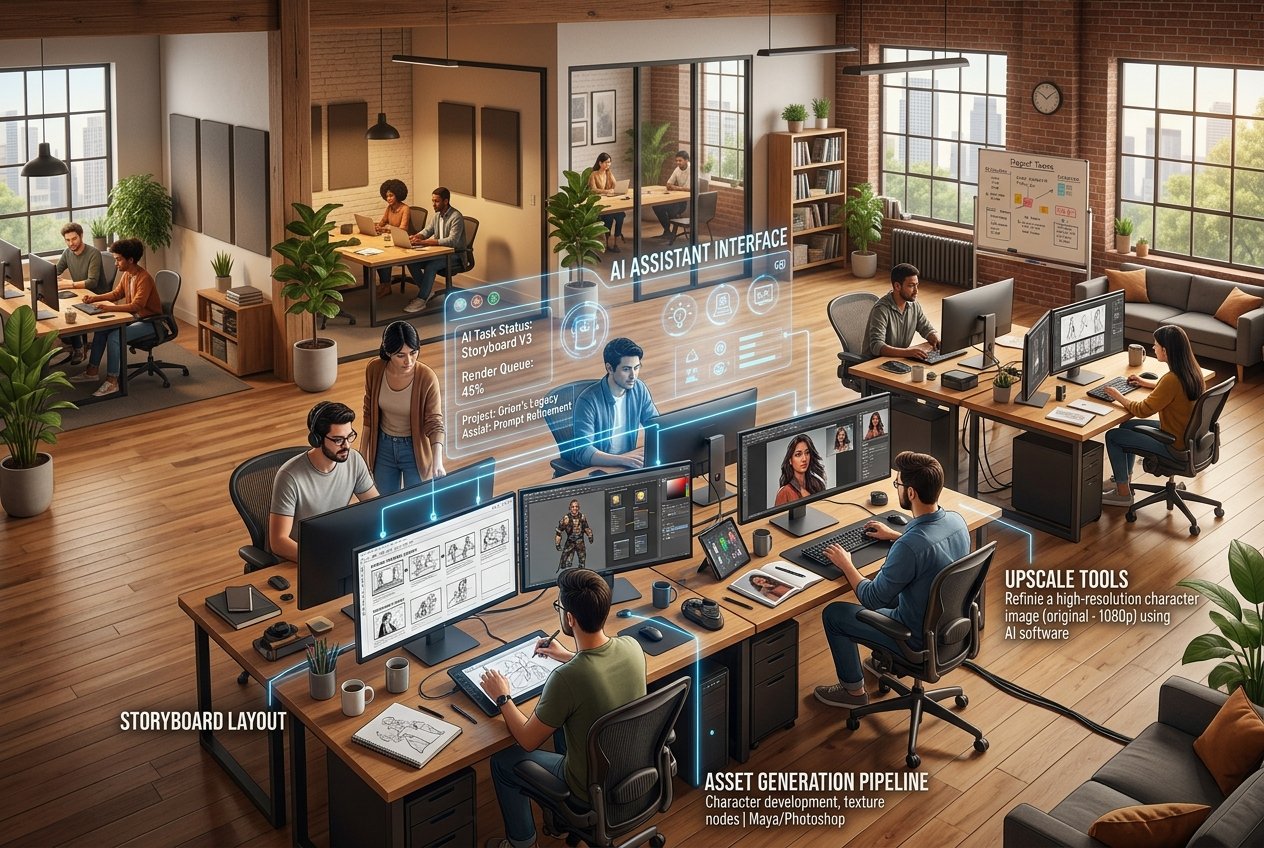
Some of the least glamorous but most consistently adopted AI applications are in technical cleanup tasks: AI-assisted rotoscoping (isolating subjects from backgrounds), denoising and upscaling for simulations and renders, and automated retopology for 3D assets. These tasks were traditionally time-consuming, junior-level work, and AI adoption here has been fast precisely because the tasks are well-defined and the output is easy to verify against.
Asset and texture generation
Generative AI is used to quickly populate environments with texture variations, background elements, and set-dressing assets — particularly useful for large open-world games and expansive VFX environments needing volume rather than hero-level detail on every single asset.
Where studios are still cautious
Key narrative characters, hero assets, and anything requiring exact brand or IP consistency are still handled primarily through traditional pipelines with AI playing a smaller, supporting role at most. Studios remain cautious about fully AI-generated content for anything customer-facing where consistency, IP ownership, and quality control carry real commercial risk — a viral AI demo and a shippable, legally clean production asset are different bars entirely.
The honest pattern across the industry
AI adoption in real studios consistently follows the same shape: fast adoption for repetitive, verifiable, non-final-facing tasks, and slow, cautious adoption for creative, brand-critical, or narrative-central work. For students, this is a far more useful mental model than either "AI is replacing everything" or "AI is just hype" — it's neither, and understanding specifically where the line currently sits is what makes a graduate immediately useful in a real studio pipeline.