How Games Are Made: A Realistic Production Overview
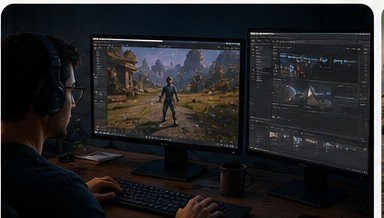
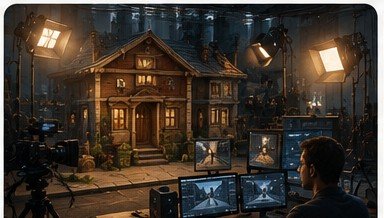
Game development is often misunderstood as either "just coding" or "just art" — in reality, it's a multi-year, multi-discipline production process with distinct phases, each requiring different specialized skills.
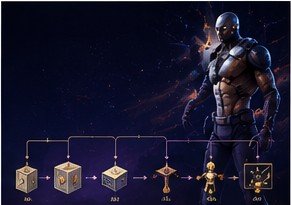
Pre-production and concept. Game designers and concept artists establish core mechanics, art direction, and a playable prototype proving the core idea is actually fun — a stage that can take months and often involves discarding ideas that don't hold up in testing.
Pre-alpha and vertical slice. Teams build a small, polished section of the game — a "vertical slice" — demonstrating final quality across art, gameplay, and technical systems, often used to secure further funding or publisher approval.
Alpha production. The bulk of content creation happens here — levels, characters, systems, and mechanics are built out across the full scope of the game, though not yet polished or fully balanced.
Beta and polish. Content is largely complete; the focus shifts to bug fixing, balancing, performance optimization, and incorporating playtester feedback — often the longest and most detail-intensive phase.
Certification and launch. Platform-specific requirements (console certification, store compliance) must be met before release, followed by launch-day technical monitoring and rapid post-launch patching for issues that surface at scale.
Live service and post-launch. For many modern games, launch is the beginning, not the end — ongoing content updates, balance patches, and community management continue for months or years after release.
The team behind it. Designers, programmers, artists (across many specializations), producers, QA testers, and increasingly community managers and live-ops specialists all work in parallel across these phases — game development is genuinely one of the most cross-disciplinary creative industries.
Why this matters for students. Seeing the full production timeline — not just the fun early concepting stage — helps set realistic expectations about the discipline, iteration, and teamwork required to actually ship a game.
Nuevopixels' Game Design program structures coursework around these real production phases, so students experience the discipline of finishing and polishing work, not just the excitement of early concepting.