Facial Animation: Where Character Animation Gets Hardest
📌 Table of Contents
Of all the skills in a 3D animator's toolkit, facial animation is consistently rated the hardest to master — and the most valuable. Audiences are wired from birth to read human faces with extraordinary precision, so even tiny errors in timing or shape read instantly as "fake" in a way body animation rarely does.
Why faces are uniquely difficult
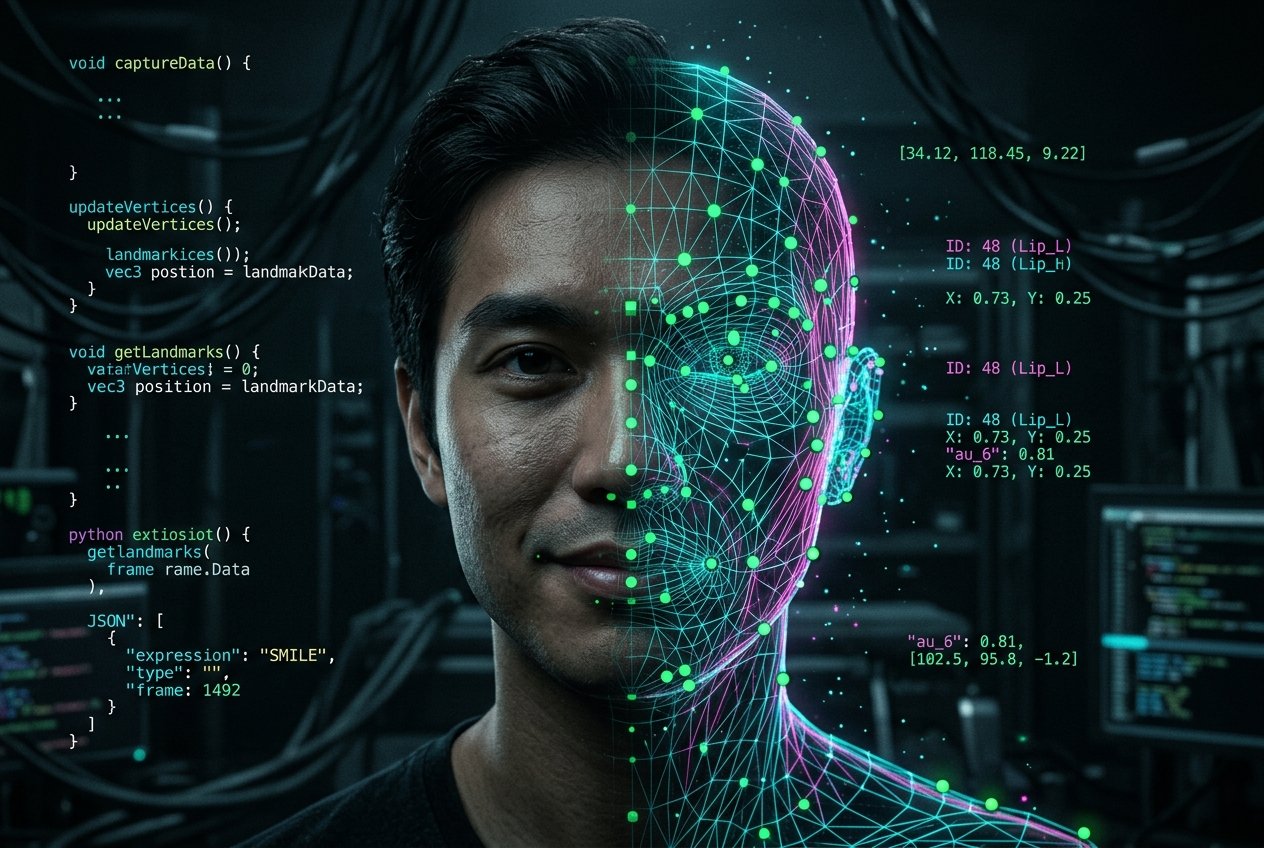
The human face has roughly 43 muscles capable of combining into thousands of distinct expressions, many of them subtle and asymmetric. A believable smile, for instance, isn't just the mouth — it involves the eyes narrowing (the "Duchenne marker" that separates a real smile from a fake one), the cheeks lifting, and brief micro-movements before and after the main expression. Miss these details and a character's joy reads as unsettling rather than genuine — the classic root of the "uncanny valley" problem.
The blendshape approach
Most production pipelines use **blendshapes** (also called morph targets): a library of pre-sculpted facial poses — brow raised, cheek puffed, mouth corner pulled — that animators blend and combine to build any expression. A well-built facial rig might include 50-150 blendshapes. Learning to combine them believably, rather than relying on just the obvious "happy," "sad," "angry" extremes, is what separates competent facial animation from expressive, character-specific performance.
Lip-sync as its own discipline
Dialogue animation adds a layer most students underestimate: phonemes (mouth shapes for specific sounds) need to align not just with the audio but with the emotional subtext of the line. A technically accurate lip-sync that ignores the character's emotional state during that line still reads as robotic. Reference footage — filming yourself or a reference actor performing the dialogue — remains the single most effective tool for getting this right.
AI's growing role
Tools like NVIDIA's Audio2Face and various AI lip-sync systems can now generate a rough facial performance directly from an audio clip, dramatically speeding up the first pass on dialogue-heavy scenes. But every studio using these tools still routes the output through a human animator for polish — AI-generated facial animation tends to be technically accurate but emotionally flat, missing the acting choices that come from understanding a character's motivation in a scene.
What to practice
Beginners should start with pure expression studies before attempting dialogue: animate a face moving through a single strong emotion, then a transition between two emotions, before adding lip-sync. Facial animation specialists are in consistently high demand in animation and game studios, precisely because so few artists push through the difficulty to get genuinely good at it.