Stable Diffusion for Designers: What It's Actually Good For
📌 Table of Contents
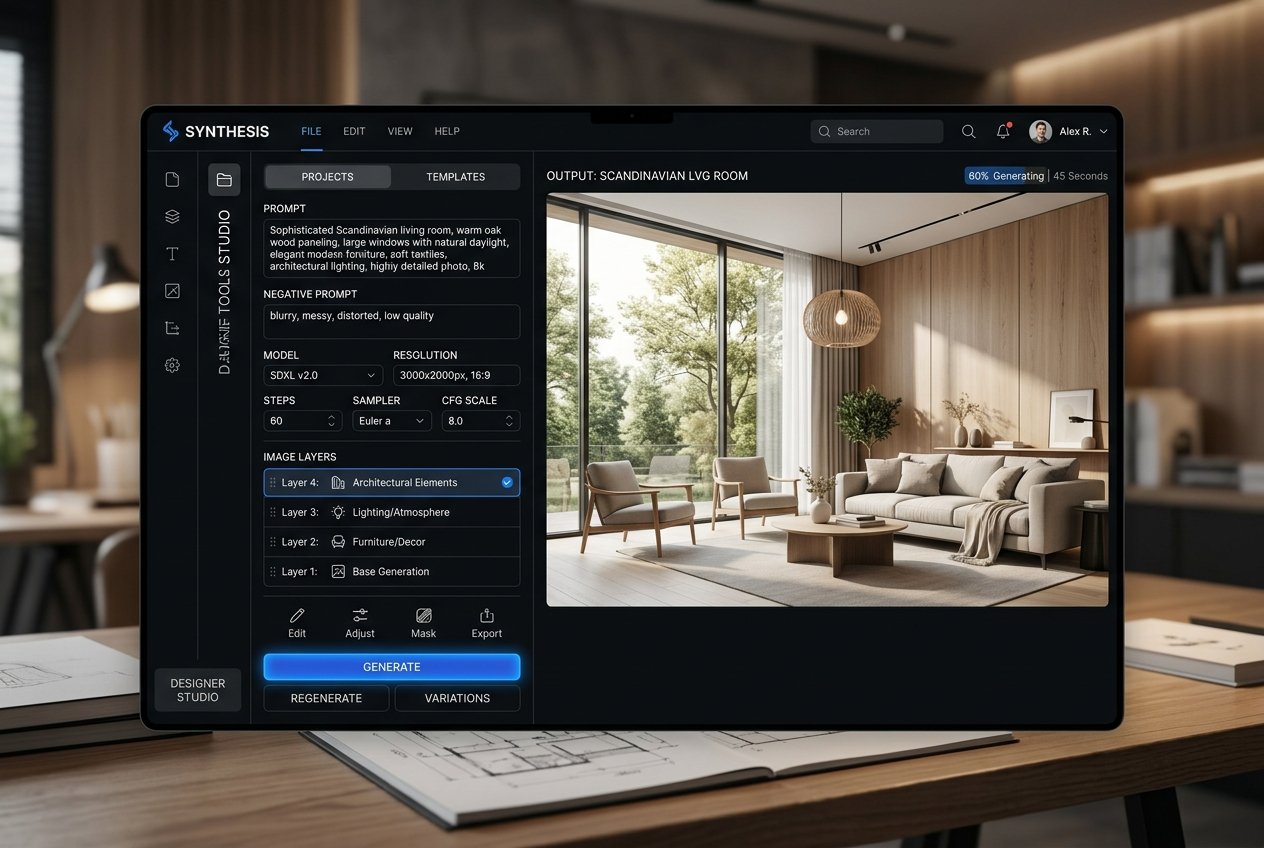
Stable Diffusion, the open-source image generation model that underpins many AI art tools (including ComfyUI workflows), remains one of the most relevant AI technologies for graphic designers to understand — not because it replaces design skill, but because of how deeply customizable and controllable it is compared to closed, consumer-facing alternatives.
Why "open" matters for designers specifically
Unlike closed AI image tools where a company controls the model and its outputs, Stable Diffusion is open-source, meaning designers and studios can run it locally, fine-tune it on custom datasets, and build specialized versions trained specifically on a brand's visual style, a client's product photography, or a particular illustration style. This is a meaningfully different use case than "generate a random image from a prompt" — it's closer to building a proprietary design tool tailored to a specific studio's needs.
Fine-tuning and LoRAs
A key technique designers use is training **LoRAs** (Low-Rank Adaptation models) — small, efficient add-ons that teach a base Stable Diffusion model a specific style, character, or product without retraining the entire model from scratch. A design studio can train a LoRA on a client's existing brand illustrations, then generate new, on-brand visual assets that consistently match that established style — something generic prompting in a closed tool can't reliably achieve.
Practical design applications
Designers use Stable Diffusion-based workflows for rapid mood-boarding and concept exploration, generating background textures and patterns, product mockup variations, and increasingly for controlled, brand-consistent marketing asset generation at scale. Combined with control techniques like ControlNet (which lets a designer guide generation using a sketch, pose, or depth map rather than text alone), it becomes a genuinely precise design tool rather than a random-output generator.
The limitations worth knowing
Output consistency across a set of images (matching lighting, character appearance, or style precisely across multiple generations) remains a real challenge without careful technical setup. Copyright and licensing questions around training data also remain unresolved in parts of the industry, and design studios working with recognizable brands need to be thoughtful about how generated assets are sourced and used commercially.
What students should focus on
Rather than treating Stable Diffusion as a single skill, students benefit from understanding it as part of a broader AI-assisted design toolkit — alongside traditional design skills, since the designers getting the most value from it are the ones directing it with a clear, trained eye for composition, color, and brand consistency, not the ones relying on default outputs.