Runway ML: Inside the Tool Reshaping AI Video Production
📌 Table of Contents
Runway has become one of the most widely adopted AI video platforms in 2026, used by everyone from solo content creators to Hollywood studios, and understanding what it actually offers gives motion graphics and design students a clearer sense of where this technology fits in professional work.
From research project to production tool
Runway was founded by researchers at NYU's Interactive Telecommunications Program, and its co-founder Cristóbal Valenzuela co-authored the original research paper behind Stable Diffusion — giving the company deep technical roots in generative AI before "AI video" was a mainstream category. Backed by significant investment from Google, NVIDIA, and Salesforce, Runway has grown from an experimental tool into infrastructure used on real productions, including VFX and previsualization work on Oscar-recognized films.
What the platform actually includes
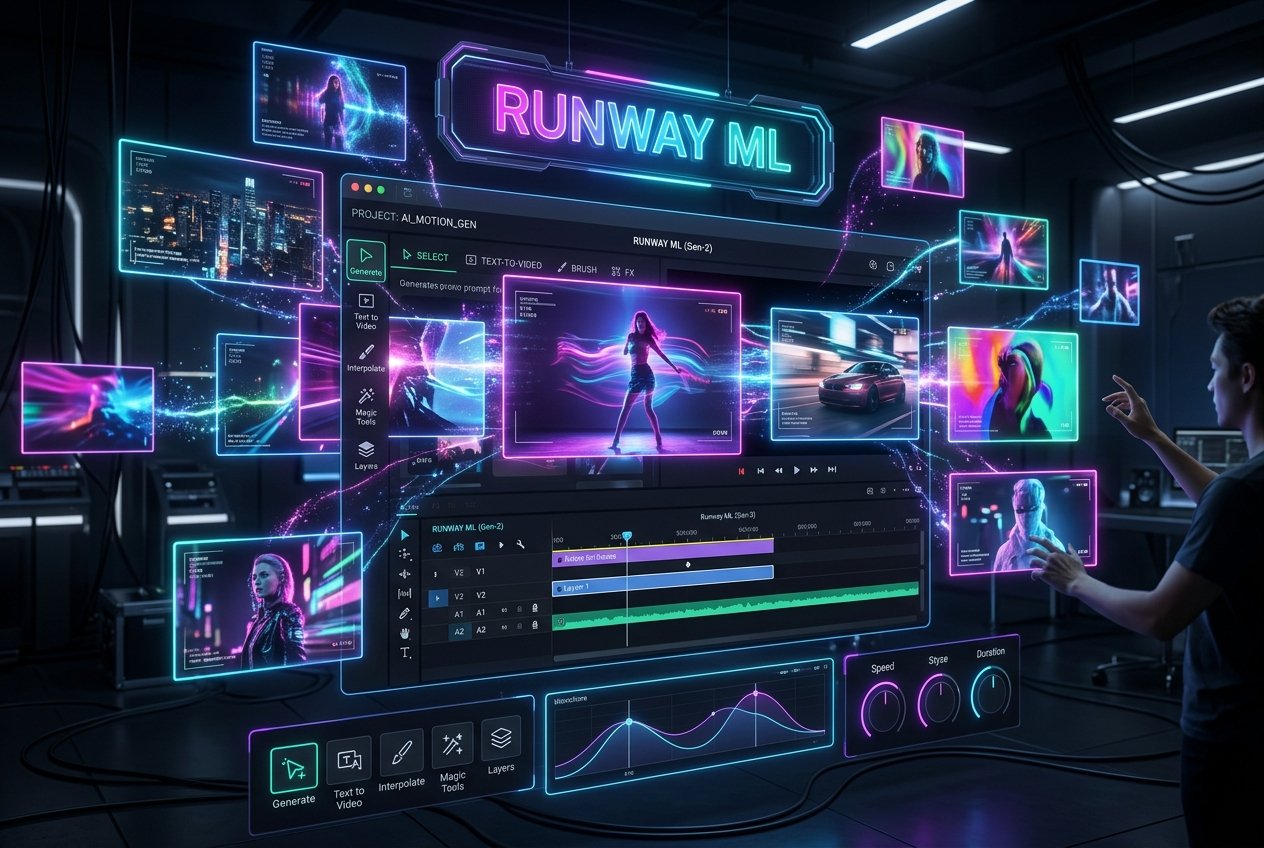
Runway's current model lineup (Gen-4 and Gen-4 Turbo) handles text-to-video and image-to-video generation with meaningful improvements in character and scene consistency across a generated clip — a persistent weak point in earlier AI video tools. **Aleph**, Runway's in-video editing model, lets users modify existing footage through text instructions — adding, removing, or restyling elements without traditional VFX compositing work. **Act-Two** enables motion and performance capture-style animation without a physical mocap setup, letting a creator's own recorded performance drive a generated character. All of this runs cloud-based in a browser, meaning no dedicated GPU hardware is required.
Real production use cases
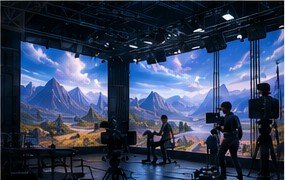
Beyond individual creators, Runway is used for previsualization (testing how a scene or shot might look before committing to expensive traditional production), rapid concept development, and VFX-adjacent work like object removal, background replacement, or style transfer that would traditionally require significant compositing time. Major studios have adopted it specifically as a speed tool within larger pipelines, not typically as a replacement for the final, polished shot work.
What it's not good at (yet)
Precise, frame-accurate control — matching an exact brand animation, hitting exact sync points, maintaining perfect consistency across a long-form piece — remains difficult with generative video tools broadly, Runway included. Most professional use treats Runway output as a strong starting point or supporting element, refined and integrated using traditional editing and compositing tools rather than used unmodified as a final deliverable.
For students
Learning Runway's interface takes hours, not months, which makes it a low-friction addition to a design or motion graphics skillset. The more valuable skill is understanding where in a production pipeline it genuinely saves time (previz, rough concept generation, background elements) versus where traditional, controllable techniques are still required — that judgment is what studios are actually hiring for, not just tool familiarity.