Pipeline TD (Technical Director): A Career for the Technically Minded Artist
Pipeline TD is one of the least visible, most structurally important roles in a VFX or animation studio — and one most students never hear about until well into their training, if at all.
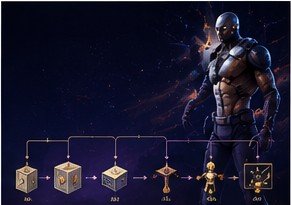
What the job actually involves: building and maintaining the technical systems and tools that let an entire studio's art and production pipeline actually function smoothly — automating repetitive processes, building custom tools inside software like Maya or Houdini, managing how files and assets move between different departments and software packages, and solving technical bottlenecks that would otherwise slow down an entire production.
How this differs from a technical artist role: technical artists tend to focus on tools and problems within a specific art discipline (rigging tools, shader tools); pipeline TDs typically work at a broader, studio-wide level — how assets move from modeling to rigging to animation to rendering, how version control and file management work across a whole production, how different software packages talk to each other. It's a role built more on software engineering and systems thinking than on artistic production itself, though understanding art pipelines deeply is still essential.
Step 1: Build genuine programming skill — Python is the industry standard. Pipeline TDs write real, substantial code — automation scripts, custom tools, pipeline integrations — more consistently than almost any other role in a studio's art department. This is closer to software engineering than most other creative-industry roles.
Step 2: Understand production pipelines from the inside, ideally through direct exposure to at least one art discipline (modeling, animation, rendering) so you understand what a pipeline actually needs to support, not just abstract software engineering principles.
Step 3: Learn version control and asset management systems — tools like Perforce or Git, adapted for the large binary files (3D models, textures) common in art production, which behave differently than typical software version control.
Step 4: Get comfortable with multiple software packages' scripting APIs — Maya's Python API, Houdini's scripting tools, and increasingly, how these integrate with studio-wide standards like USD (Universal Scene Description) for moving assets between different software.
Step 5: Build a portfolio that's fundamentally different from an artist's — documented tools you've built (even small ones: a batch file-renaming script, an automated export tool), the specific problem each one solved, and ideally, measurable time saved for whoever would use it.
Why this role deserves more student attention than it gets: pipeline TDs are consistently described by studios as difficult to hire for, since the role requires genuine software engineering skill combined with real understanding of art production — a combination most computer science graduates and most art graduates individually lack, which creates real opportunity for a student willing to deliberately build both.