NVIDIA ACE: AI-Driven NPCs and What They Mean for Game Artists
📌 Table of Contents
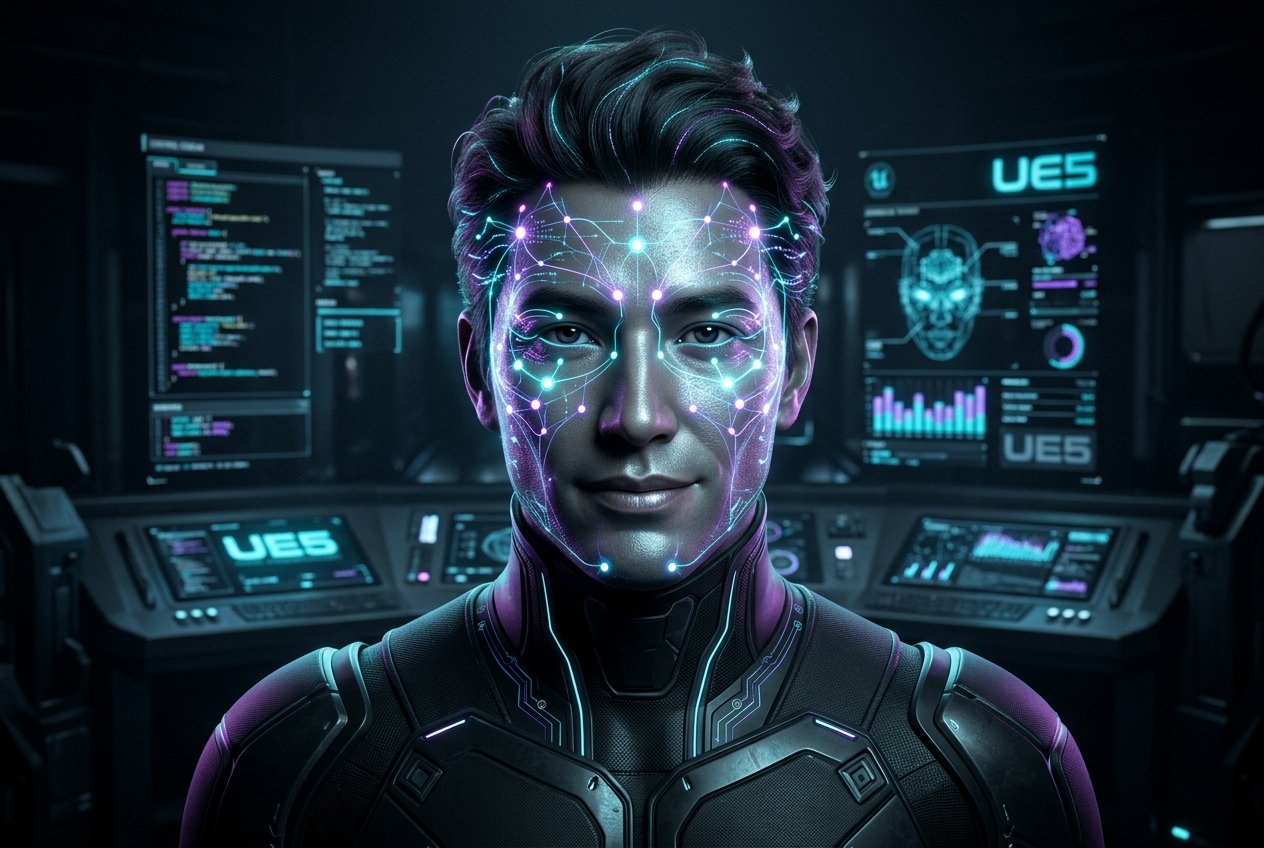
NVIDIA ACE (Avatar Cloud Engine) is a suite of AI technologies designed to give game characters — particularly NPCs — dynamic speech, emotion, and behavior generated in real time, rather than relying entirely on pre-scripted dialogue trees and animation cycles. For game art and design students, it represents a meaningful shift in how character content gets built and what skills that requires.
What ACE actually does
ACE combines several AI components: large language models that let NPCs generate contextually appropriate dialogue instead of choosing from pre-written lines, **Audio2Face** technology that generates real-time facial animation and lip-sync directly from audio, and speech and emotion recognition systems that let NPCs respond to a player's tone or in-game context. Rather than replacing traditional character art and animation, ACE is designed to plug into a studio's existing character rigs and assets — the AI drives the performance, but the underlying model, rig, and art direction still come from human artists.
Why studios are interested
Traditionally, giving an NPC meaningful, varied dialogue meant recording and animating every line individually — an approach that scales poorly for open-world games wanting hundreds of NPCs with distinct, reactive personalities. ACE-style systems let studios generate a much larger volume of contextual interaction without linearly scaling voice-acting and animation budgets, which is particularly relevant for large open-world and simulation-heavy games.
What this means for artists, not just programmers
This is not purely a technical/programming shift — it directly affects character art and animation pipelines. Facial rigs need to be built specifically to work well with real-time AI-driven animation (clean blendshape setups, robust deformation), and character artists increasingly need to think about how a model will hold up under dynamic, unscripted expressions rather than only a fixed set of animator-authored poses. Game artists who understand both traditional character pipelines and how AI-driven systems consume rigs and assets are positioned well for this shift.
The honest limitations
Real-time AI-generated dialogue and expression can be inconsistent — occasionally producing responses or expressions that break character or tone, which is a real concern for studios protective of their narrative and brand. Most studios currently use ACE-style tools for background or ambient NPCs rather than key narrative characters, where hand-authored writing and animation remain the standard.
For students
Understanding facial rigging fundamentals and how real-time engines (particularly Unreal, where much of this technology integrates) handle dynamic character performance is a more durable skill investment than learning any specific AI tool, since the underlying rigging and animation principles remain the foundation these systems are built on top of.