Game Art Careers: More Paths Than You Think
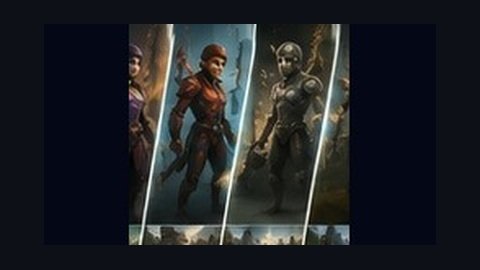
"Game art" isn't one job — it's an entire ecosystem of specializations, each with different skills, tools, and career trajectories. Understanding the map helps you choose where to specialize.
**Concept art.** Defines the visual direction of characters, environments, and props before production begins. Requires strong traditional drawing/painting fundamentals plus digital tools (Photoshop, Procreate) and increasingly, AI-assisted ideation tools for rapid direction exploration.
**Character art.** Sculpts and textures the 3D characters players see and control. Deep specialization in anatomy, sculpting (ZBrush), and texturing/shading. Often branches further into stylized vs. realistic character specialists.
**Environment art.** Builds the game's worlds — levels, props, lighting, atmosphere. Requires strong spatial and lighting sense alongside technical skills in engines like Unreal or Unity.
**Technical art.** The bridge between art and engineering — building shaders, rigging systems, and tools that let artists work efficiently within engine constraints. Highly valued and relatively rare, since it demands both artistic eye and coding literacy.
**UI/UX art for games.** Designs menus, HUDs, and interface elements that feel native to the game's world while remaining genuinely usable — a specialized blend of graphic design and game design thinking.
**VFX art (in-game).** Different from film VFX — this is real-time particle effects, spell animations, environmental effects, all built to run performantly inside a game engine rather than rendered frame by frame.
**Which path fits you?** If you love drawing and ideation, concept art. If you love sculpting and anatomy, character art. If you love building spaces and atmosphere, environment art. If you love solving technical problems alongside art, technical art.
Nuevopixels' Game Art tracks let students sample these specializations through real project work before committing to a focus — because the right specialization is the one that matches how you actually like to work, not just which job title sounds appealing.
---