AI-Assisted 3D Modelling: What Changes for Working Artists
📌 Table of Contents
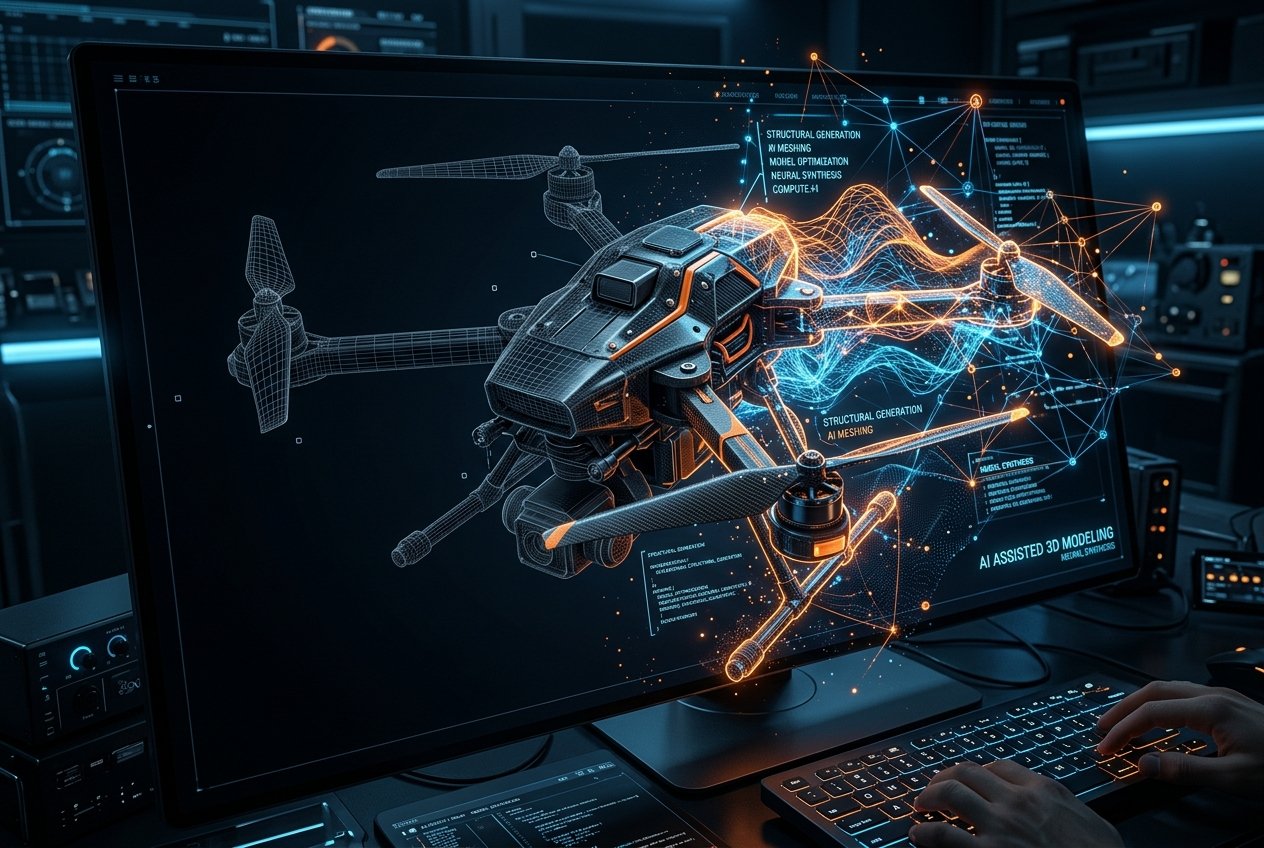
3D modeling has traditionally been one of the most time-intensive parts of any VFX or game pipeline — a single hero asset can take a skilled modeler days or weeks. AI-assisted modeling tools are now compressing parts of that timeline, but understanding exactly what they do (and don't) replace is essential for anyone building a career in 3D.
What AI modeling tools do today
Text-to-3D and image-to-3D generators can now produce base meshes — rough geometry and even basic textures — from a text prompt or reference image in minutes. NVIDIA's generative AI models for OpenUSD, along with a growing set of third-party tools, can also generate materials, apply physically accurate properties, and assist with retopology (rebuilding clean, animation-ready topology over dense scan or sculpt data). AI upscaling and generative texture tools can extend a photographed material into a full seamless texture set far faster than manual painting.
Where human modelers remain essential
Generated base meshes are almost never production-ready. They typically need topology cleanup for proper deformation (critical for anything that will be animated), UV work, and detail passes that match a specific art direction rather than a generic AI interpretation. Hard-surface modeling for mechanical or architectural assets — where precision and real-world proportion matter — remains an area where AI generation is unreliable, and skilled human modelers are still essential for anything that needs to be technically accurate, not just visually plausible.
The shift in day-to-day work
Rather than starting every asset from a blank viewport, modelers increasingly start from an AI-generated base and spend their time on retopology, detail sculpting, and technical correctness — a shift similar to what happened in concept art with AI-assisted ideation. This changes the skill emphasis: strong topology knowledge, an eye for silhouette and proportion, and understanding of how a mesh needs to behave once rigged are becoming more valuable relative to raw sculpting speed, since speed is exactly what AI tools now offer for free.
What to learn
Students should still build strong fundamental modeling skills the traditional way before leaning on AI tools — the same way learning to draw by hand makes someone better at directing AI-generated concept art. Beyond that, learning retopology workflows (tools like RetopoFlow or Maya's retopology toolset), UV unwrapping, and basic materials/shading knowledge lets a modeler take a rough AI-generated base and turn it into something production-ready — which is where the actual employable skill now sits.