Spatial Computing: Designing for a 3D-Aware Digital World
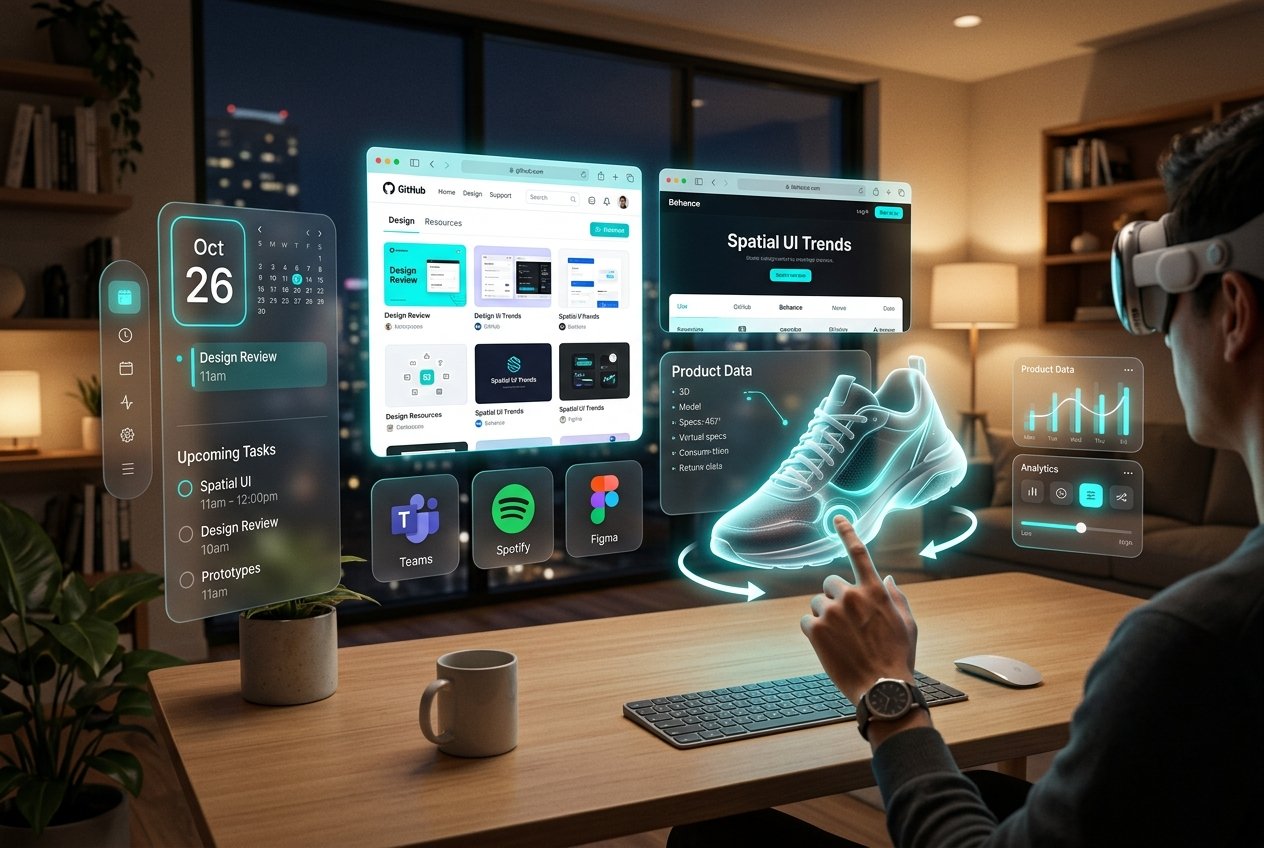
Spatial computing — technology that understands and interacts with the physical 3D space around a user — is quietly becoming one of the more significant shifts in how digital content gets designed and experienced.
**What it actually means.** Spatial computing refers to technology (AR devices, mixed reality headsets, advanced cameras) that maps and understands physical space in real time, allowing digital content to interact convincingly with the real world — placing a virtual object realistically on a real table, for instance, rather than floating in a fixed 2D overlay.
**Where it's already in use.** AR shopping experiences that place virtual furniture in a real room, spatial design tools letting architects and designers visualize projects at real scale in physical space, and mixed reality headsets enabling spatially-aware productivity and creative applications.
**Why this is a genuinely new design discipline.** Designing for spatial computing requires thinking beyond flat screens entirely — depth, real-world lighting interaction, and how users physically move through and around digital content all become core design considerations in ways traditional 2D or even standard 3D design doesn't require.
**The skills this demands.** 3D design and spatial reasoning skills transfer directly, but spatial computing design also requires new consideration for physical ergonomics, real-world lighting integration, and interaction design specific to how people naturally move and gesture in physical space.
**Career relevance.** As AR and mixed reality hardware continues to mature and reach wider adoption, demand is growing for designers and 3D artists who understand how to build content specifically for spatially-aware, real-world-integrated experiences rather than traditional flat-screen formats.
**What this means for students.** Strong 3D and real-time engine fundamentals form the foundation for spatial computing work — the specific spatial design considerations layer on top of skills already core to 3D animation and game design training.
Nuevopixels' 3D and Game Design programs build the foundational spatial and real-time skills that transfer directly into this emerging design discipline as the hardware and market continue to mature.
---