Rotoscoping After AI: Is the Job Disappearing?
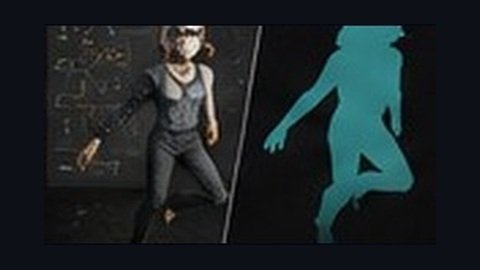
Rotoscoping — manually tracing around subjects frame by frame to isolate them from footage — has long been considered one of VFX's most tedious, entry-level tasks. AI-assisted rotoscoping tools have automated much of this manual work, raising real questions about the role's future.
**What AI rotoscoping tools do today.** Modern AI-assisted masking tools can automatically track and isolate subjects across many frames with increasing accuracy, dramatically reducing the manual frame-by-frame tracing that once defined entry-level roto work.
**Why this is a genuine, significant shift.** Roto has traditionally been one of the most common entry points into VFX studios — a high-volume, teachable task that let new artists build pipeline familiarity while contributing real production value. AI automation has genuinely reduced the volume of pure manual roto work available.
**Where human roto work still matters.** Complex edge cases — motion blur, fine detail like hair and fur, semi-transparent elements, and unusual footage conditions — still require skilled manual correction of AI-generated mattes, since automated tools reliably struggle with these specific challenges.
**The shift in what the job actually looks like.** Rather than pure manual tracing, roto-adjacent work increasingly involves reviewing and correcting AI-generated masks — a role that requires the same trained eye for edge accuracy, but with different day-to-day tasks than traditional roto work.
**What this means for new VFX artists.** Relying on pure roto skill as an entry strategy into VFX is a genuinely riskier path than it was several years ago. Building broader compositing skills alongside roto/matte correction ability creates a stronger, more durable entry point into the industry.
**The bigger pattern this reflects.** As discussed across our AI and pipeline pieces, AI tends to compress the most repetitive, high-volume tasks first — meaning students should prioritize building toward judgment-heavy specializations (compositing, FX, lighting) rather than betting a career path entirely on tasks AI is actively automating.
**A practical takeaway for students.** Learn roto and masking as one component of broader compositing training, not as a standalone specialization — this positions you for the corrected, hybrid version of the role that's actually being hired for now.
Nuevopixels' VFX program teaches roto and matte work as an integrated part of compositing training, preparing students for how this foundational skill has genuinely evolved rather than training toward a narrowing job description.