2D vs 3D Animator: Which Career Path Should You Choose?
This is one of the first real fork-in-the-road decisions an animation student faces, and it's worth making deliberately rather than defaulting to whichever software the course happens to start with.
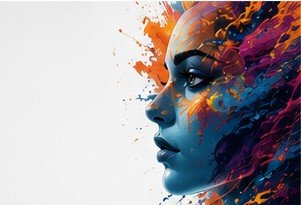
2D animation involves drawing or manipulating flat, hand-drawn or vector-based characters and movement, frame by frame or through rigged 2D puppets (in tools like Toon Boom or After Effects). It draws heavily on traditional drawing and illustration skill, and tends to suit students who enjoy the craft of drawing itself, not just the end motion.
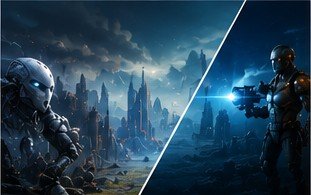
3D animation involves posing and animating rigged 3D character models within software like Blender or Maya, using keyframes on a digital skeleton rather than drawing each frame by hand. It draws more on an understanding of weight, timing, and spatial staging than on raw drawing skill, and tends to suit students who think more spatially than illustratively.
Neither is "easier" — the difficulty is just distributed differently. 2D animation demands strong, consistent drawing skill maintained across hundreds of frames; 3D animation demands strong technical comfort with rigging, timing curves, and 3D software, alongside a solid understanding of movement and weight even without drawing each pose from scratch.
Industry demand differs by sector, not overall volume. 2D remains strong in specific areas — series animation, certain OTT content, mobile games, advertising, and stylized content where a 2D look is a deliberate creative choice, not a limitation. 3D dominates in feature animation, most AAA and mid-size game development, VFX-adjacent work, and any production requiring camera flexibility or realistic lighting.
A genuinely useful way to decide: try both for a focused few weeks each before committing — a short 2D walk-cycle exercise, then a short 3D one — and pay attention not just to which result you're happier with, but which *process* you actually enjoyed. Animation careers involve thousands of hours in that process, not just the occasional finished result, so enjoying the daily work matters as much as raw aptitude.
A practical note for students unsure: many successful animators cross-train in both to some degree, since understanding 2D principles (timing, spacing, squash and stretch) directly strengthens 3D animation, and vice versa — specializing doesn't mean total exclusion of the other discipline's fundamentals.